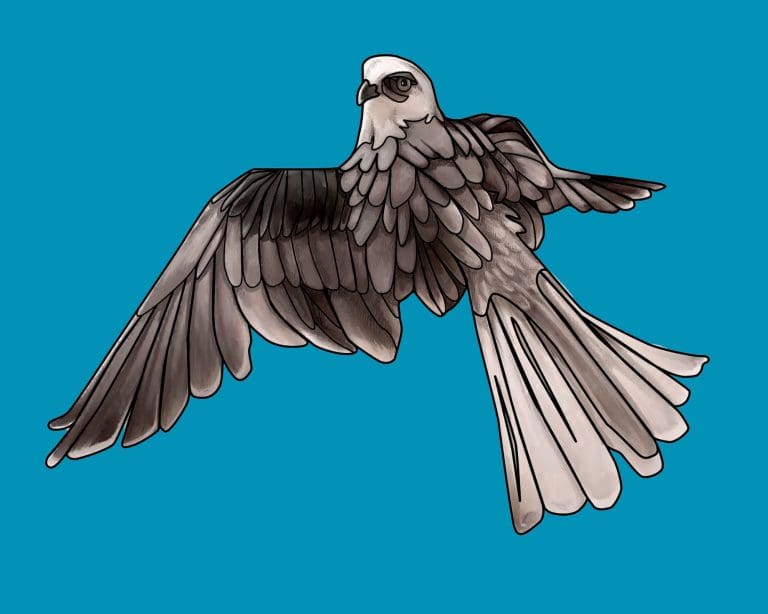
Fire-Bringer, Death’s Shadow · Story of the California Condor
When a California Condor passes overhead, the world seems to darken. Its wings stretch nearly ten feet across, a moving shadow that silences the canyon below. For centuries, this vast bird has been more than a scavenger. To the Chumash it was a creator, to the Wiyot a bringer of fire, and to early settlers a wilderness relic too large to be real. Today, after nearly vanishing from the earth, the condor survives as both legend and living presence—part myth, part miracle of endurance.
Natural History
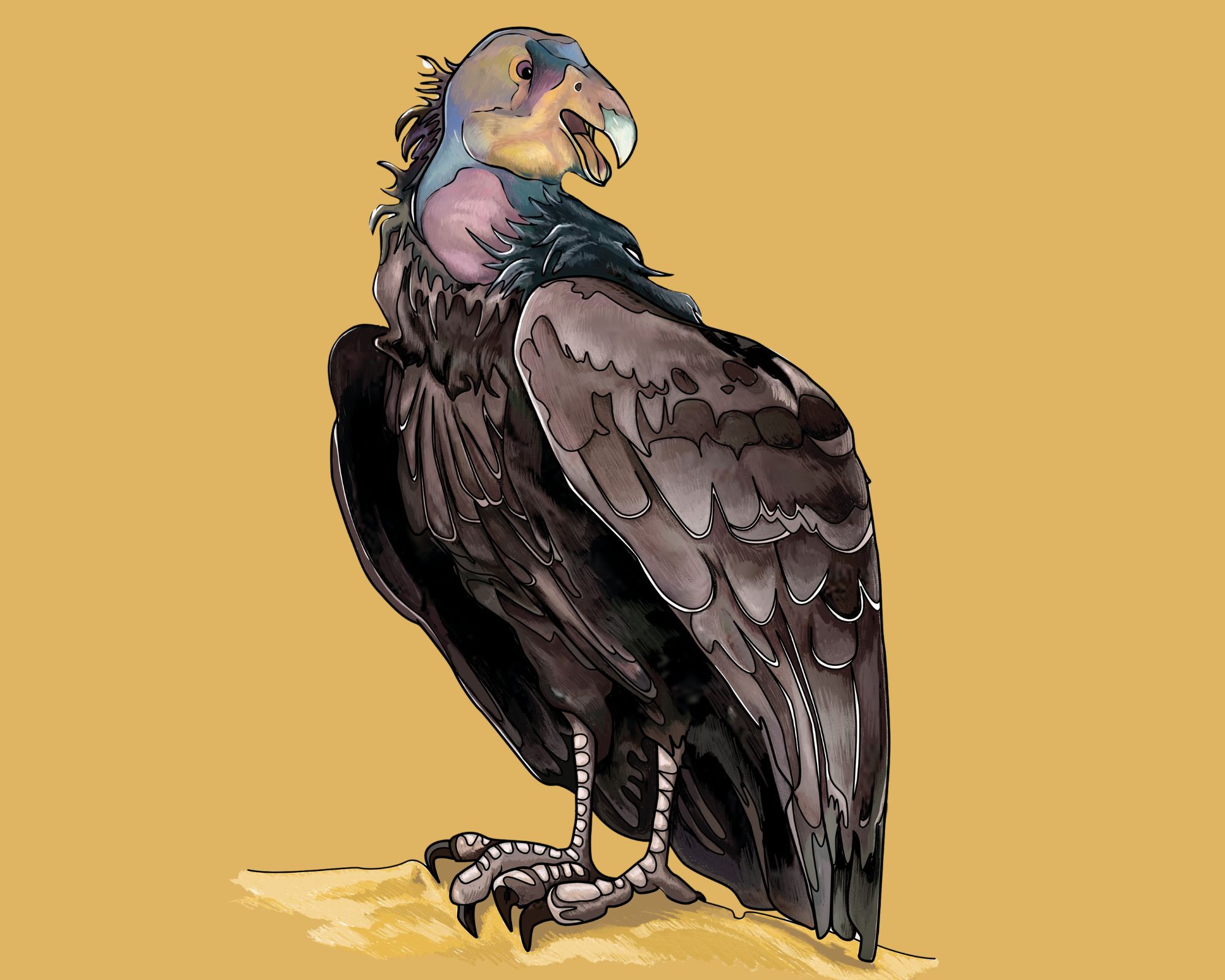
The California Condor (Gymnogyps californianus) is the largest flying bird in North America, a raptor with a wingspan stretching up to nine and a half feet. Black-feathered with a bald head and ivory-white patches beneath the wings, it drifts silently on canyon thermals, circling high for hours without a single wingbeat.
Unlike hunters that strike from the sky, the condor is a scavenger. It feeds on the remains of deer, elk, whales, and cattle, playing the vital role of keeping landscapes clean of carrion. This slow, deliberate way of life is matched by its biology: condors live for decades but raise only a single chick every other year.
Folklore & Mythology
Among the Chumash people of coastal California, the condor was no ordinary bird—it was a creator. In some stories, Condor painted the world, his wings brushing color across the land. In others, he brought fire to humans, only to singe his head in the attempt, which is why his skin is bare today. The Wiyot of northern California told a similar tale of Condor as fire-bringer, carrying both life and danger in his wings.
To the Hopi and Navajo farther east, giant birds like the condor were linked to storms, death, or beings of immense power that lived in the sky. Their shadows were read as omens, reminders of forces too great to ignore. Condor feathers, rare and revered, were carried in ceremonies, worn as symbols of strength and connection to the spirit world.
Early settlers and naturalists encountered the condor with their own mix of awe and dread. Its massive wingspan recalled the carrion birds of biblical deserts, creatures that hovered over death. They called it a wilderness relic, a prehistoric bird, as if it had flown out of another age.
In every telling—whether creator, fire-bringer, storm-bearer, or death’s companion—the condor stood apart. It was never just another bird, but a figure of power, peril, and endurance.
Symbolism in Color and Behavior
The California Condor’s appearance carries its own symbolic weight. Its black body and bare head tie it to death and carrion, creatures that live on what has passed. For many cultures, this shadowed form marked it as a bird of endings, an omen circling above.
Yet in flight, the symbolism shifts. When a condor rises on thermals, it becomes a figure of freedom and endurance, connecting earth and sky with effortless grace. Few birds embody such extremes—the scavenger bound to death, and the soaring giant that rides the heavens.
Its size alone inspires reverence. To see a condor glide overhead is to feel dwarfed, as though confronted by something older than human memory. Its silence adds to the effect—no wingbeats, only shadow, as if the air itself carries the bird.
This duality—reviled as a carrion-eater, revered as a sacred giant—has shaped the condor’s symbolic role for centuries. It is a reminder that life and death, decay and renewal, are inseparable, and that beauty often lives in what we fear.
Story Meets Science
The condor’s role in story often magnifies its most visible traits—size, shadow, and its bond with death. Myths describe it as fire-bringer or storm-bearer; settlers cast it as a biblical scavenger hovering over the wilderness. All of these readings arise from what science confirms: a bird built to feed on carrion, soaring silently on vast wings until it locates what others leave behind.
What folklore paints as ominous is, in biology, a service. By stripping carcasses clean, condors prevent the spread of disease, recycling nutrients back into the land. The bald head, often read as a mark of death, is in fact an adaptation for hygiene, keeping feathers free from the decay of its meals.
The condor’s supposed invincibility—giant, ancient, unassailable—clashed with reality when the species nearly disappeared in the 20th century. Myths cast it as eternal; science revealed its fragility. And yet the conservation story, from only 22 individuals to a growing reintroduced population, has brought folklore and fact together again. The condor is once more a symbol of endurance, not only in story, but in life.
Encounters & Human Imagination
To see a condor is to step into the overlap of myth and reality. Hikers in Zion, birders at the Grand Canyon, and travelers along California’s cliffs all describe the same sensation: awe, edged with unease, as a shadow wider than a person is tall drifts silently overhead.
Modern observers often reach for ancient language. They call it the “ghost bird,” the “lord of the air,” or the “shadow of the canyon.” The rarity of the encounter only adds to the effect. Because so few condors survive, each sighting feels like a visitation, an omen or blessing carried on the wind.
Even without knowing the Chumash fire stories or Navajo storm myths, people still respond in mythic terms. The scale of the bird, the silence of its glide, the sheer improbability of its survival—all invite the imagination to see more than just a scavenger. The condor, alive against all odds, remains a creature of story every time it passes overhead.
Conservation & Cultural Legacy
The California Condor came closer to extinction than almost any other bird. By 1987, only 22 remained, all captured in a last effort to save the species. What could have been an ending became a rebirth: through captive breeding and reintroduction, condors now soar again over California, Arizona, Utah, and Baja California.
This comeback story carries its own symbolic weight. Once tied to myths of death and fire, the condor has become a modern emblem of renewal. Conservationists hail it as proof that even the most fragile giants can endure when people act. For Indigenous communities, its return also revives cultural ties—feathers once lost to ceremony can again be honored, and stories regain a living presence in the sky.
The condor’s legacy stretches beyond North America. Its kin, the Andean Condor, has long been revered as a sacred bird of the high Andes, a messenger between worlds. Together, these species remind us that condors are not only survivors of deep time but also bearers of cultural memory across continents.
The California Condor is more than a conservation success; it is a cultural touchstone, a bird whose survival ensures that both ecosystems and traditions remain alive.
Fact and Fable
The California Condor has always lived in two worlds. In story, it is a creator, a fire-bringer, a giant that carries death and storm on its wings. In science, it is a scavenger, a recycler of life, a fragile species nearly lost to time. Both are true in their own way.
To watch a condor today is to feel that tension. Its flight recalls myths that stretch back centuries, while its survival speaks to decades of human effort and care. The line between fact and fable blurs with every silent glide across a canyon sky.
What was once a shadow of endings has become a sign of renewal. The condor endures—not only in myth, but in life—and with it, the stories we tell about the bond between people, birds, and the wild places that hold us both.